
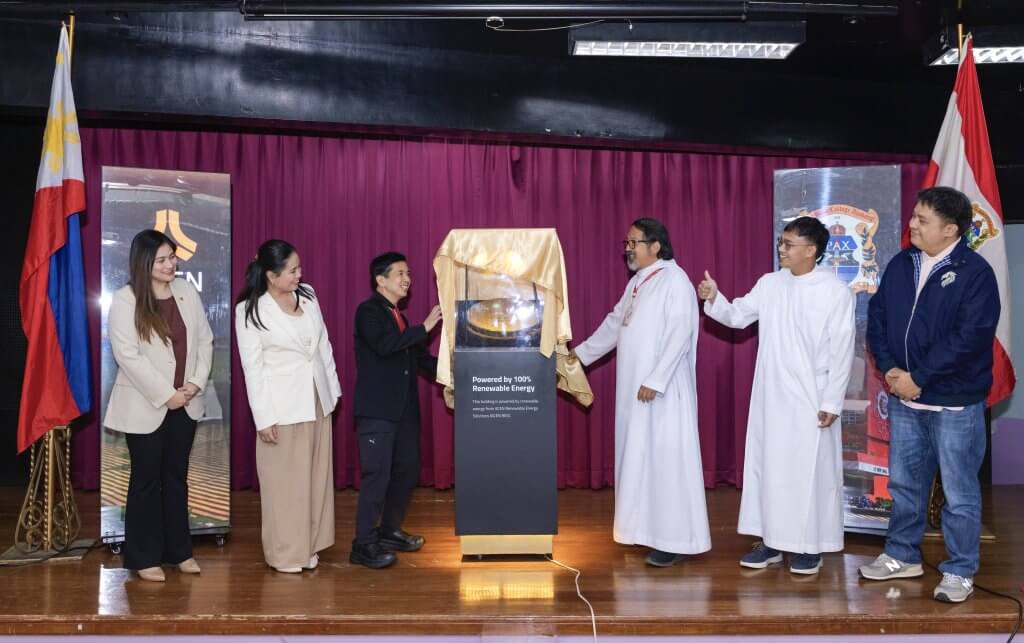
Unveiling of the ACEN RES Seal: The “Powered by Renewable Energy” badge is formally presented to San Beda College Alabang, recognizing the institution’s commitment to sourcing 100% of its electricity from renewable energy.
In photo (L–R): Kat Rosales and Atty. Ulah Urubio of ACEN RES; Tony Valdez, Senior Vice President for Market Transformation and Retail (ACEN RES); Fr. Gerardo De Villa, OSB, Rector; Fr. Leander Mary Angngad, OSB, Services Director; and Atty. Jun Cadugo of San Beda College Alabang. (Photo courtesy of ACEN RES)
In every classroom at San Beda College Alabang (SBCA), learning unfolds as it always has—students engage in discussion, faculty guide discovery, and the rhythms of academic life continue with familiar energy. Yet behind this everyday experience lies a quiet but transformative change. Today, the entire SBCA campus operates on 100 percent renewable energy, marking a significant milestone in the institution’s commitment to responsible stewardship and forward-looking education.
Through a partnership with ACEN Renewable Energy Solutions (ACEN RES), San Beda College Alabang has taken a decisive step toward aligning its operations with the values it seeks to form in its students: accountability, innovation, and care for creation. More than an operational upgrade, the transition reflects a deeper institutional choice—to ensure that progress and sustainability move together.
Choosing a Different Source of Energy
Traditionally, electricity consumers have little control over how their power is generated. Energy simply comes from the grid, supplied through a mix of sources that often include fossil fuels. Through customer choice programs authorized by the Energy Regulatory Commission, however, qualified institutions can now select their electricity supplier.
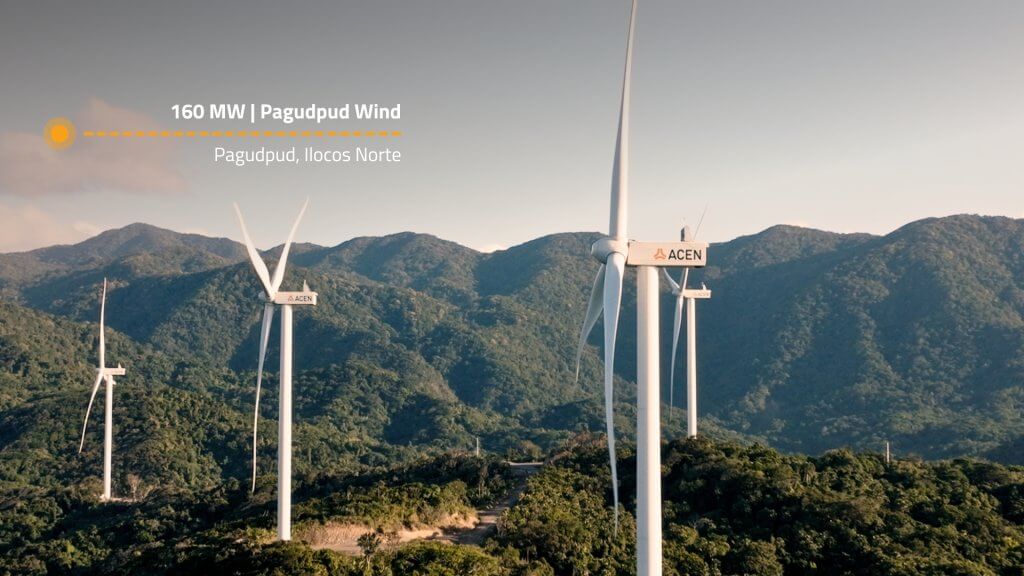
By exercising this option, SBCA transitioned to renewable energy sourced from ACEN’s portfolio of solar, wind, and geothermal power plants across the country, complemented by the school’s own rooftop solar installations. While the campus continues to receive electricity through existing distribution lines, the energy attributed to its consumption is now fully matched by renewable generation.
The change required no new wiring or physical alterations to campus facilities. What changed was the source of power—and the environmental impact behind it.
Understanding Renewable Energy on the Grid
A common question arises: if electricity flows through the same power lines, how can it truly be renewable?
Electricity behaves differently from physical goods. Once generated and injected into the national grid, energy becomes part of a shared system where individual sources cannot be distinguished—much like rivers flowing into a single lake. Consumers draw electricity from this common pool rather than from a dedicated line connected to one specific plant.
Carbon emissions, however, occur at the point of generation. When SBCA commits to renewable energy equivalent to its electricity use, renewable power plants generate that required volume of energy in place of fossil-fuel facilities. As renewable generation increases, fossil-fuel plants reduce output, resulting in real and measurable emissions reduction.
To ensure transparency, every unit of electricity produced and consumed in the Philippine grid is independently monitored through the Independent Electricity Market Operator of the Philippines (IEMOP). This system matches generation and consumption in real time, preventing double counting and ensuring that renewable energy purchases correspond to actual renewable production.
In this way, SBCA’s shift to renewable energy represents a verified environmental contribution—not merely a symbolic one.
Real Impact, Real Benefits
The environmental impact of the transition is significant. By sourcing its electricity entirely from renewable energy, San Beda College Alabang avoids more than 2,000 tons of carbon dioxide emissions annually—equivalent to the carbon absorbed by nearly 34,000 trees or the emissions produced by a gasoline-powered vehicle traveling over nine million kilometers.
Beyond environmental gains, the partnership also delivers tangible institutional benefits. The school is projected to save approximately ₱8 million annually compared to previous electricity arrangements, allowing resources to be redirected toward programs and services that directly benefit the Bedan community.
The initiative also strengthens SBCA’s institutional identity at a time when students and families increasingly value environmental responsibility. By integrating sustainability into its daily operations, the college demonstrates that academic excellence and social responsibility can advance together.
Reliability and Shared Responsibility
Transitioning to renewable energy does not change how electricity is physically delivered to campus. ACEN RES, as energy supplier, secures and reserves renewable generation capacity specifically for SBCA’s consumption, ensuring sufficient supply even if individual renewable facilities experience unexpected interruptions.
Meanwhile, the responsibility for maintaining power lines and restoring service during outages remains with the distribution utility. Because all consumers share the same transmission and distribution infrastructure, grid-wide interruptions or damaged lines affect customers regardless of their energy supplier.
This distinction highlights an important reality: renewable energy changes the source of electricity, but the reliability of delivery continues to depend on the national grid and local distribution systems that serve all users.
Education Beyond the Classroom
For San Beda College Alabang, the transition carries meaning beyond operational efficiency. Educational institutions shape not only knowledge but values. By choosing renewable energy, SBCA demonstrates that sustainability is not merely discussed in theory but practiced through concrete decisions.
Students encounter environmental responsibility not only in lessons or advocacy campaigns but through the very systems that power their campus life. The initiative transforms sustainability into a lived experience—one that encourages future leaders to consider the ethical dimensions of progress and development.
As a Catholic institution, this commitment resonates deeply with the Church’s call to ecological conversion articulated in Laudato Si’, which urges humanity to care for creation and respond to environmental challenges with moral responsibility. In embracing renewable energy, SBCA affirms its role as a steward of God’s creation, responding to both the needs of the present and the responsibility owed to future generations.
Powering the Future
Climate change remains one of the defining challenges of our time, calling for action from individuals, institutions, and communities alike. While sustainability is often viewed as a long and complex journey, meaningful change frequently begins with a single decision.
By transitioning to renewable energy, San Beda College Alabang demonstrates how institutions can lead through example—showing that innovation, faith, and environmental stewardship can work hand in hand.
Today, every lecture delivered, every innovation pursued, and every aspiration formed within the campus is supported by energy drawn from cleaner and more sustainable sources.
In choosing renewable power, San Beda does more than reduce emissions. It affirms a vision of education that prepares students not only to succeed in the future, but to help safeguard it.

(This article includes technical explanations shared by ACEN Renewable Energy Solutions as part of SBCA’s renewable energy partnership).
About the Featured Photo
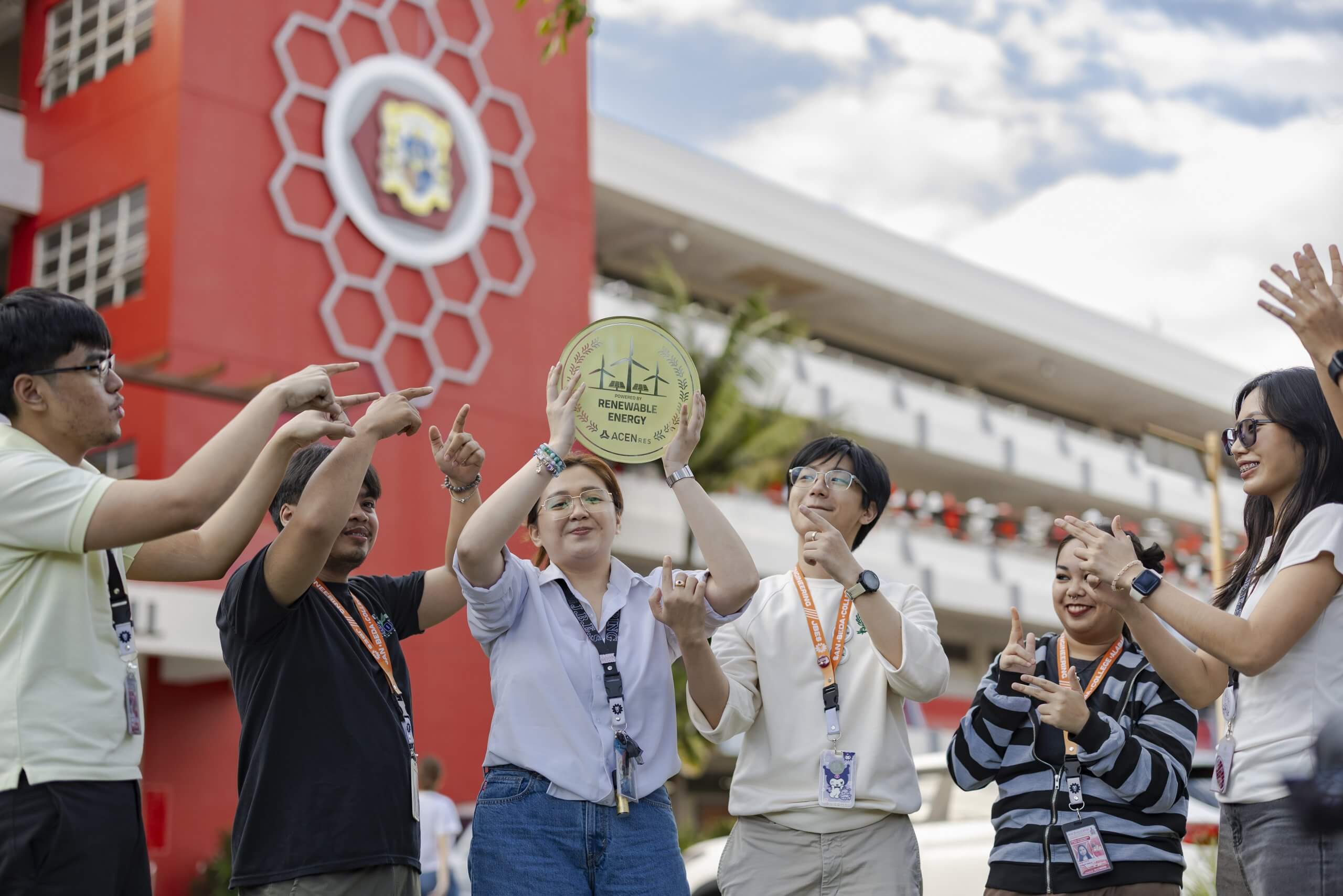
Students from the School of Engineering and Technology gather on campus, pointing toward the “Powered by Renewable Energy” badge awarded to San Beda College Alabang by ACEN RES. The proprietary seal recognizes institutions that source 100% of their electricity from renewable energy.
Photos courtesy of ACEN RES


