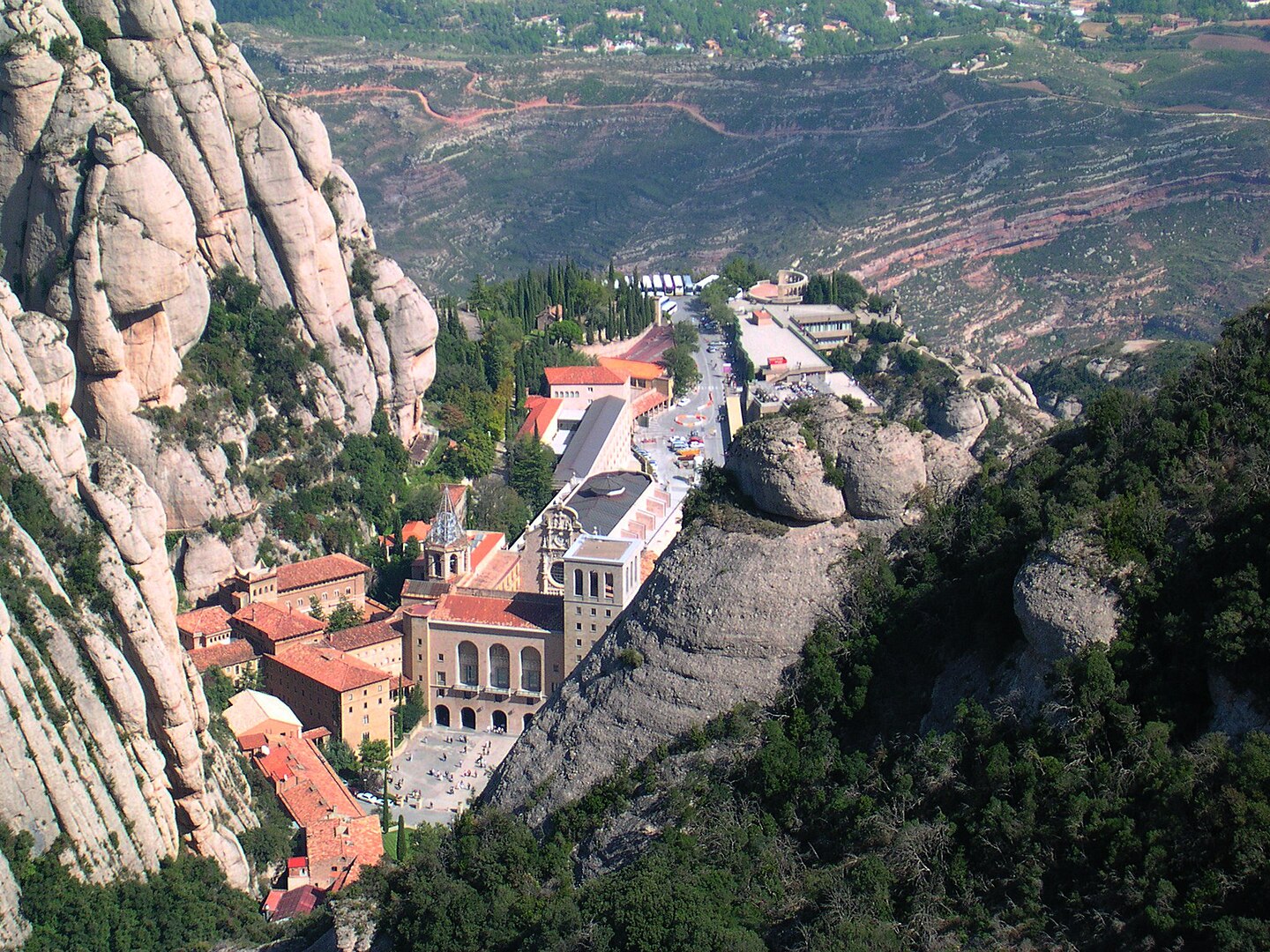
This year, 2025, marks a historic milestone for the Benedictine world—the 1,000th anniversary of Montserrat Abbey. Nestled in the rugged mountains of Catalonia, Spain, this revered monastery has stood as a beacon of faith, culture, and pilgrimage for a millennium. Now, as Montserrat celebrates this extraordinary occasion, the world is invited to reflect on its rich heritage, honor its enduring mission, and embrace the future with renewed faith and hope.
A Benedictine and Marian Legacy
Montserrat Abbey traces its origins to 1025 when Abbot Oliba of Ripoll, a renowned peacemaker and reformer, established a Benedictine monastery alongside a small hermitage dedicated to the Virgin Mary. From its very foundation, Montserrat has embodied a dual identity—as a Benedictine monastery and a Marian sanctuary. Pilgrims from around the world have journeyed to this sacred site, drawn by the revered image of Our Lady of Montserrat, affectionately known as La Moreneta.
Throughout its history, Montserrat has remained steadfast in its Benedictine charism. Guided by the Rule of St. Benedict, the monks have embraced a life of prayer and work, fostering a deep sense of peace and welcome. As Pope St. Paul VI eloquently stated in Pacis Nuntius (1964), the Benedictine spirit is carried forth “with the cross, with the book, and with the plough”—a testament to the monastery’s mission of faith, scholarship, and service to society.
A Thousand Years of Montserrat: A Journey Through History
Long before Montserrat Abbey was founded, the mountain itself was already considered a sacred place. As early as 880, a small hermitage dedicated to the Virgin Mary stood on the mountain, drawing local devotion. However, it was in 1025 that Abbot Oliba of Ripoll and Cuixà, a visionary Benedictine leader, formally established Montserrat Abbey, sending monks to build a monastery beside the hermitage. This marked the beginning of a thriving spiritual and cultural center that would grow in prominence over the centuries.
From its early days, Montserrat became known as both a Benedictine monastery and a Marian sanctuary. Pilgrims traveled from far and wide to venerate the revered statue of Our Lady of Montserrat, La Moreneta, which remains a focal point of devotion today. The monastery flourished as a center of learning, preserving valuable medieval manuscripts and fostering music and art. The Escolania Boys’ Choir, one of the oldest in Europe, became a hallmark of Montserrat’s artistic heritage.
Despite its long history of faith and scholarship, Montserrat has also faced periods of adversity. The monastery was severely damaged during the Napoleonic Wars and later suppressed during the Spanish Civil War, yet each time, it rose from the ruins, reaffirming its role as a beacon of hope and spirituality.
As Montserrat Abbey now celebrates its 1,000th year, its history serves as a powerful testament to endurance, faith, and unwavering commitment to the Benedictine way of life. Its legacy continues to inspire generations, standing as a sacred place where prayer, culture, and history converge atop the mountain that has watched over its journey for a millennium.
A Year of Reflection and Celebration
In honor of its 1,000th year, Montserrat Abbey has organized a year-long program of events highlighting its historical, cultural, and spiritual significance. Among the major celebrations are historical exhibitions showcasing Montserrat’s evolution through the centuries, special liturgical celebrations, concerts by the renowned Escolania Boys’ Choir, and pilgrimages and retreats that invite visitors to experience the monastery’s long tradition of hospitality and contemplation.
Adding to the significance of this millennium celebration is its alignment with the Jubilee Year 2025, proclaimed by Pope Francis under the theme Pilgrims of Hope. This convergence underscores Montserrat’s enduring role as a place of pilgrimage, contemplation, and evangelization.

Montserrat in the 21st Century
As Montserrat Abbey steps into its second millennium, it does so with a commitment to its founding mission while addressing the challenges of the modern world. The monks continue their dedication to education, interfaith dialogue, and social initiatives, ensuring that Montserrat remains not only a historical landmark but a living, dynamic center of faith and service.
For Bedans, this celebration is particularly meaningful. Montserrat’s Benedictine spirit has deeply influenced the identity of San Beda College Alabang and its sister institutions. Just as the monastery stands as a pillar of prayer, knowledge, and community, so too does San Beda strive to uphold these values in its formation of students who embody the Benedictine motto: Ora et Labora.
A Journey Through Time and Faith
The millennium of Montserrat Abbey is more than a historical milestone—it is a testament to the enduring power of faith, the richness of Benedictine tradition, and the profound impact of a community dedicated to God and service. Whether as a place of worship, a cultural treasure, or a sanctuary for seekers, Montserrat continues to inspire generations, inviting all to walk the path of faith and peace.
As the celebrations unfold throughout 2025, let us join in commemorating this remarkable legacy, giving thanks for the past and embracing the future with the same spirit of hope that has defined Montserrat Abbey for a thousand years.