
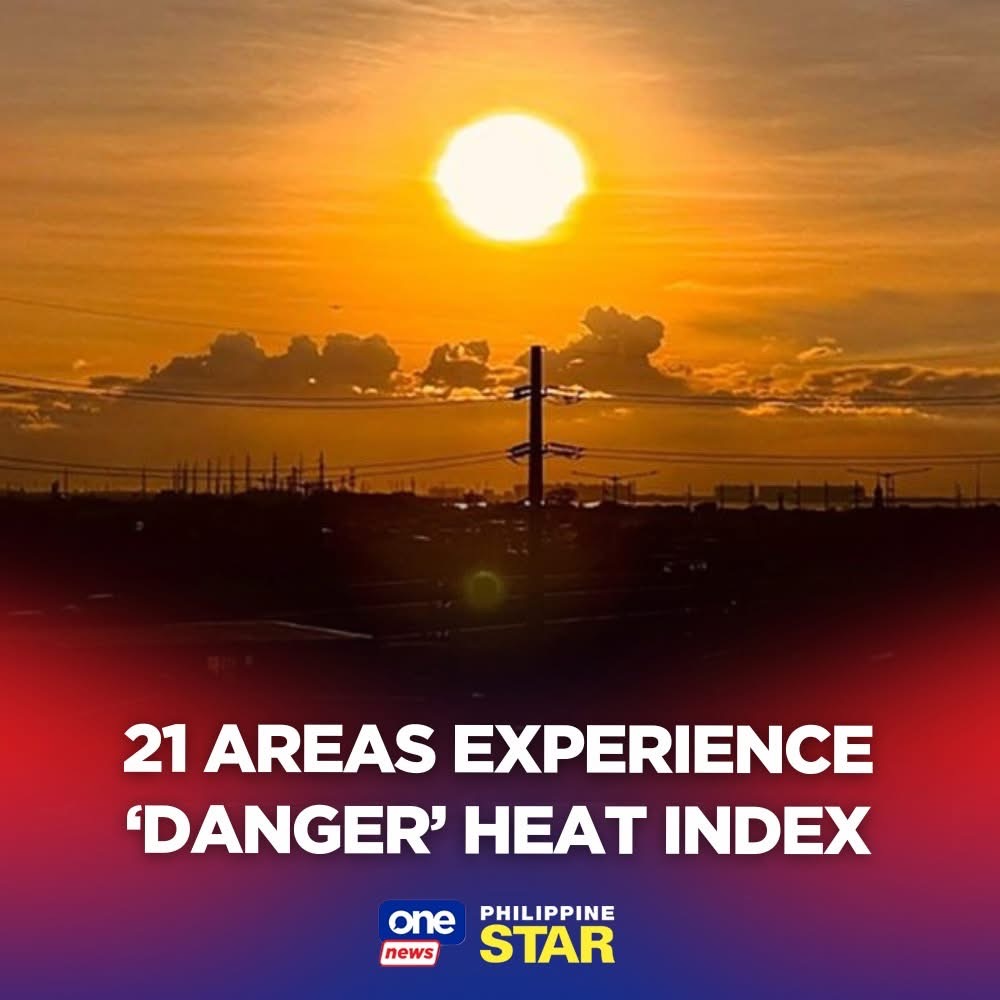
As the dry season blazes across the Philippines, especially in urban centers like Metro Manila, the heat index continues to soar to alarming levels. With “feels-like” temperatures reaching up to 46°C in some areas, what used to be a typical summer has now become a health and environmental emergency.
But this isn’t just about staying cool—it’s a wake-up call.
What’s Fueling the Fire?
The heat index, or the temperature our bodies actually feel, combines humidity and air temperature. Once it hits 42°C and above, it enters the “danger zone,” increasing the risk of heat stroke, dehydration, and other heat-related illnesses.
What’s alarming is that these extreme heatwaves are no longer rare. According to climate scientists, this is the new normal—driven by climate change. Studies show that without human-induced climate change, this year’s record temperatures in Asia, including the Philippines, would have been nearly impossible.
Health in the Hot Seat
Already, the Department of Health (DOH) has reported multiple cases of heat exhaustion and heatstroke this year, with vulnerable groups—children, the elderly, and outdoor workers—being the most at risk. On top of that, rising temperatures are worsening air pollution, increasing the spread of diseases like dengue, and putting enormous pressure on the country’s energy and water supplies.

So, What Can We Do?
Here’s the good news: each of us can make a difference. Climate change may seem like a global problem, but its solutions start at home, in our schools, and in our communities.
As a Community:
- Plant Trees, Create Shade: Organize a neighborhood or school tree-planting activity. Trees cool down streets and absorb carbon dioxide.
- Promote Green Spaces: Encourage your barangay or school to maintain gardens, pocket parks, and rooftop gardens.
- Practice Proper Waste Management: Segregate, recycle, and reduce. Methane from landfills is a major contributor to global warming.
- Support Clean Energy: Petition for the use of solar-powered lighting in public spaces and schools.
As an Individual or Family:
- Save Energy at Home: Turn off unused lights and appliances. Choose energy-efficient bulbs and fans.
- Use Less Plastic: Bring your own water bottle, utensils, and eco-bags.
- Walk, Bike, or Carpool: Fewer cars mean less air pollution and greenhouse gas emissions.
- Conserve Water: Simple habits like turning off the tap while brushing your teeth matter.
From Awareness to Action: A Call for Every Bedan
Climate change isn’t tomorrow’s problem—it’s today’s crisis. But it’s not too late. The time to act is now.
Let us take this as a challenge, not just as Bedans, but as stewards of creation. Let our campuses become eco-friendly zones. Let our families be role models for sustainability. Let our voices rise in support of stronger environmental policies.
One bottle less. One tree more. One voice louder. These may seem small, but together, they can spark a change that echoes beyond our campus and into the nation.
Be informed. Be involved. Be the change.
Let’s rise with hope and act with urgency—before the next heatwave becomes our new way of life.


